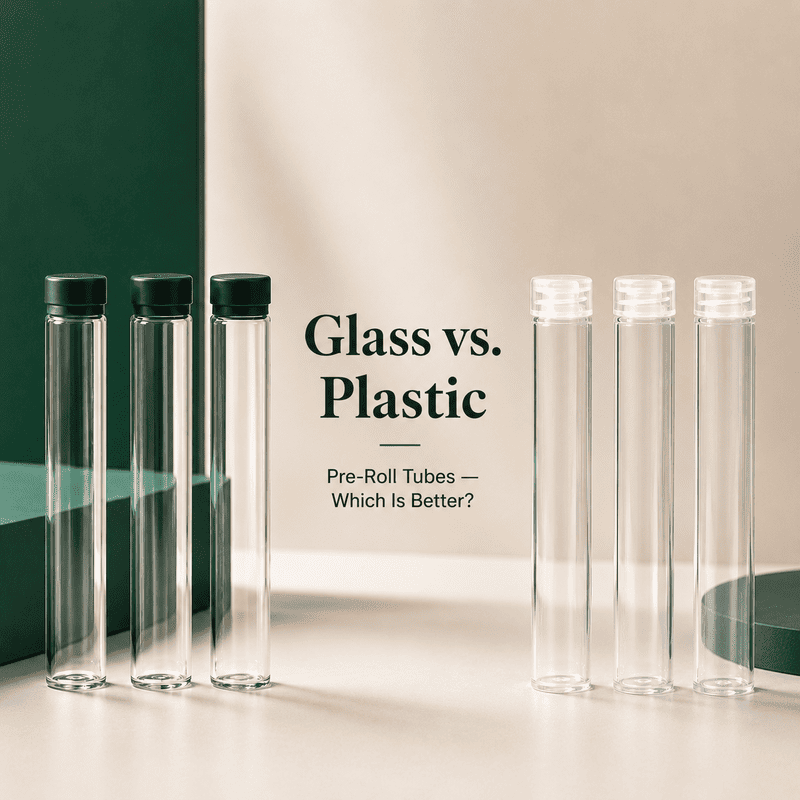
Choosing between glass and plastic pre-roll tubes is one of the first real decisions a cannabis brand makes about its packaging — and it affects everything that follows: unit cost, shipping weight, shelf appeal, and how the product is perceived at point of sale.
There is no single "best" answer. The right choice depends on your price point, your distribution model, and the story you want your packaging to tell. This guide breaks down glass pre-roll tubes vs. plastic tubes across the factors that actually matter to purchasing managers, so you can decide with confidence.
Glass vs. Plastic at a Glance
| Factor | Glass Tubes | Plastic Tubes |
|---|---|---|
| Perceived value | High / premium | Standard to good |
| Weight | Heavier | Light |
| Breakage risk | Higher | Very low |
| Shipping cost | Higher | Lower |
| Unit cost | Higher | Lower |
| Reusability | Excellent | Good |
| Odor / air seal | Excellent | Good (depends on closure) |
| Best for | Premium & limited lines | High-volume & value lines |
The sections below explain what is behind each of these factors.
1. Appearance and Branding Value
Glass carries an unmistakable sense of quality. Its clarity, weight in the hand, and the way it refracts light all signal "premium" before a single word is read. For brands competing at the top of the shelf, glass is often worth the premium for the perceived value alone — and a custom decorative finish such as dripping wax pre-roll tubes can push perceived value even higher.
Plastic has come a long way. Modern PETG and acrylic tubes can be crystal clear, frosted, or colored, and they accept printing, labels, and shrink sleeves beautifully. For brands that compete on volume or value, high-quality plastic delivers a clean, professional look at a fraction of the cost.
Branding takeaway: If your packaging is the marketing — limited drops, gift sets, flagship lines — lean glass. If you need consistent, scalable branding across a large catalog, plastic gives you more design budget per unit.

2. Durability and Breakage Risk
This is where plastic wins decisively.
Plastic tubes are virtually unbreakable in normal handling and transit. For brands shipping long distances, supplying many retail doors, or selling through channels where products get knocked around, that reliability protects both the product and your reputation.
Glass tubes look and feel superior, but they can crack or shatter if dropped — during fulfillment, on the shelf, or in a customer's bag. Protective inserts, thicker walls, and careful outer packaging reduce the risk, but they add cost and weight.
Durability takeaway: High-volume distribution and e-commerce shipping favor plastic. Controlled, premium retail environments can support glass.
3. Freshness and Odor Control
Both materials can perform well, but the closure matters more than the body.
A well-sealed tube — glass or plastic — protects the product from air, light, and moisture, which are the main causes of dried-out, stale product. Glass is naturally non-porous and provides an excellent barrier. Premium plastics with a quality airtight cap perform very competitively.
The real freshness risk is not the material; it is a poor seal. A cheap closure on either a glass or plastic tube will let air in and aroma out. This is why we always recommend evaluating the cap mechanism and gasket as carefully as the tube itself.
Freshness takeaway: Don't choose the material for freshness alone — choose a tested, airtight, child-resistant closure regardless of body material.
4. Cost and Production Differences
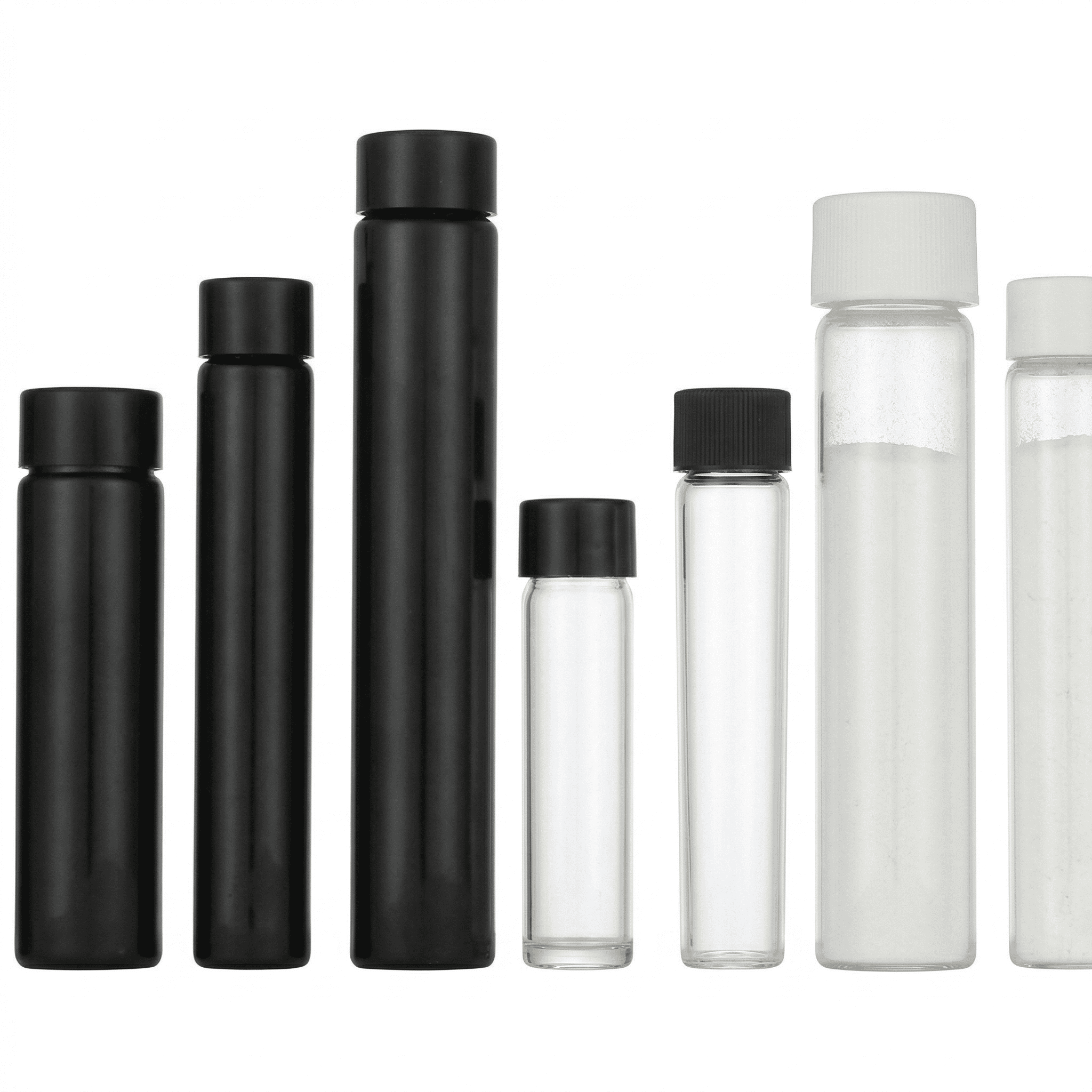
Plastic has the clear advantage on cost. Lower material cost, lower shipping weight, and lower breakage-related losses all add up — especially at high volumes. For value lines and large catalogs, plastic keeps your packaging budget efficient.
Glass costs more per unit and more to ship, and it requires more careful handling throughout the supply chain. Those costs are justified when the packaging is part of the product's premium positioning and pricing.
A useful way to think about it: plastic optimizes for margin; glass optimizes for perceived value. Many brands run both — plastic for everyday lines, glass for premium or seasonal releases.
5. Compliance: The Factor That Applies to Both
Whichever material you choose, U.S. regulated markets require child-resistant (CR) certified packaging. The good news: both glass and plastic tubes are available with certified CR closures. Child resistance is a function of the closure system, not the tube material, so neither option locks you out of compliance.
When comparing suppliers, always confirm:
- The closure is CR-certified (with documentation).
- The packaging meets your state-specific requirements.
- The supplier can provide tamper-evident options if your market requires them.
Which Should Your Brand Choose?
Choose glass if you:
- Sell premium or top-shelf lines
- Want maximum perceived value and shelf presence
- Sell through controlled retail environments
- Produce limited editions or gift-ready SKUs
Choose plastic if you:
- Ship long distances or fulfill e-commerce orders
- Run high volumes or large catalogs
- Compete on value or need a lower unit cost
- Want lighter shipping and near-zero breakage
For many brands, the smartest answer is both — matching the material to each product tier rather than forcing one choice across the entire line.

Frequently Asked Questions
Are glass pre-roll tubes more eco-friendly than plastic?
Glass is endlessly recyclable and highly reusable, which appeals to sustainability-minded brands. However, its heavier shipping footprint partially offsets that benefit. Recyclable and PCR (post-consumer recycled) plastics are increasingly popular middle-ground options.
Do plastic tubes keep products as fresh as glass?
Yes, when paired with a quality airtight, child-resistant closure. Freshness depends primarily on the seal, not the body material.
Can both glass and plastic tubes be child-resistant?
Absolutely. CR certification comes from the closure mechanism. Both glass and plastic tubes are available with certified CR caps.
Which is cheaper, glass or plastic pre-roll tubes?
Plastic is generally less expensive per unit and cheaper to ship. Glass costs more but supports premium positioning and pricing.
Get Expert Help Choosing the Right Tube
Still unsure which material fits your product line and budget? Anjoyme Packaging is a custom cannabis packaging manufacturer producing both glass and plastic pre-roll tubes with CR-certified, state-compliant closures — and we'll help you match the right format to each SKU.
Explore Glass Packaging Options → Or browse our full packaging range →