
What Is a Telescoping Box? Types, Structure & Custom Options
A complete B2B guide to telescoping rigid boxes — from the four core structural variants to materials, print finishes, and how US brands use them for premium retail presentation.
In premium B2B retail, the package often makes the first impression before the product ever does. For brands selling regulated consumer goods, luxury hardware, or limited-edition retail kits, the structural integrity and shelf presence of the outer box directly influence perceived value and unboxing experience. Among the available rigid box formats, the telescoping box remains one of the most trusted choices for North American retail brands that need durability, modular reusability, and a clean premium silhouette.
This guide breaks down what a telescoping box actually is at a structural level, the four standard variants used in US production, the materials and print finishes most commonly specified by procurement teams, and how to decide whether this format fits your SKU. By the end, you will have a clear specification framework you can bring directly to a manufacturer for quoting.
A telescoping box is a two-piece rigid setup box in which a separate lid slides over a separate base, with no hinge and no glued seam between the two parts. It is widely used for premium retail SKUs, gift sets, hardware presentation, and high-margin consumer goods because the rigid build protects fragile contents and creates a high-end unboxing experience. The four main structural variants are Full Telescope, Partial Telescope (Shoulder), Neck Box, and Double Cover Box — each suited to a different weight class and aesthetic.
Telescoping Box vs. Standard Two-Piece Box — Quick Comparison
| Attribute | Telescoping Box | Standard Folding Carton |
|---|---|---|
| Construction | Rigid greyboard with wrap; lid + base manufactured as two separate pieces | Single sheet of folding board, glue-flapped into shape |
| Wall Thickness | 1,000–1,500 gsm greyboard (1.5–2.0 mm) | 250–400 gsm SBS or kraft board |
| Perceived Value | Premium / luxury tier | Standard retail tier |
| Ships Flat? | No — ships pre-assembled | Yes — ships flat, folded on-site |
| Typical MOQ (US factory) | 500–1,000 units | 1,000–5,000 units |
| Best For | Gift kits, hero SKUs, hardware presentation, limited drops | High-volume mass retail, mailer outers |
What Is a Telescoping Box? Structure and Core Features
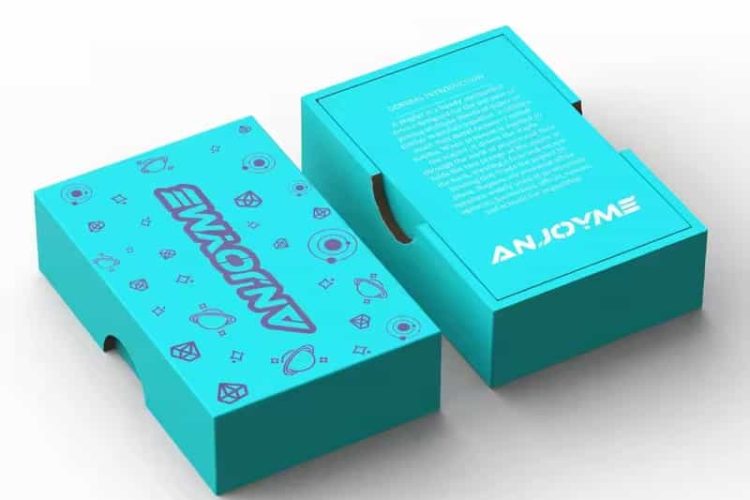
A telescoping box is a rigid setup box constructed in two independent pieces — a lid that slides down over a base, with no hinge, no string tie, and no permanent attachment between the two halves. The lid "telescopes" onto the base in the same way the two tubes of a hand telescope nest together, which is where the format gets its name in the US packaging trade.
Unlike a folding carton, a telescoping box does not arrive flat. Both pieces are pre-assembled at the factory: a greyboard chipboard core is cut, scored, corner-stayed, and then wrapped in a printed paper, fabric, or specialty material. The result is a dimensionally stable container with crisp 90-degree corners and walls that hold their shape under stacking pressure.
Anatomy of a Telescoping Rigid Box
Procurement specifications usually reference five structural elements when quoting a telescoping box. Knowing each term will help you read manufacturer drawings and dielines accurately:
- Lid (cover) — the upper piece that slides over the base. Its inside dimensions determine how the box opens and how visible the base remains when partially withdrawn.
- Base (tray) — the lower piece that holds the product, typically with a foam, EVA, paper pulp, or molded fiber insert sized to the SKU.
- Wrap material — the printed or textured paper laminated over the greyboard. Common choices include art paper, specialty papers (textured, linen, felt), or cloth wraps for the highest tier.
- Greyboard core — the rigid chipboard inside the wrap. US production runs typically use 1,000–1,500 gsm greyboard (roughly 1.5–2.0 mm thick).
- Insert / dunnage — internal cushioning that locates the product inside the base. Foam, EVA, paper pulp, vac-formed PET, or molded fiber are all common.
Telescoping ≠ Lid-and-Base Folding Box
A lot of buyers confuse the two formats because both have a separate lid. The critical difference is rigidity. A folding lid-and-base box ships flat and is folded on site; it uses thin SBS or kraft board (250–400 gsm). A telescoping box is rigid setup, ships pre-assembled, and uses thick greyboard (1,000+ gsm). The telescoping format is purpose-built for premium retail tiers where the box itself is part of the product story.
Why Brands Specify a Telescoping Format
From a US B2B procurement standpoint, telescoping boxes typically win the spec sheet for four reasons. First, the rigid construction protects fragile or high-value contents during retail handling and last-mile delivery. Second, the format reads as premium on shelf without requiring exotic finishes — the structure itself is the value cue. Third, consumers tend to keep the box after purchase for storage or display, extending brand impressions long after the sale. Fourth, the modular two-piece design makes it easy to swap between SKU variants without re-tooling — the same base can pair with multiple lid prints for limited drops or co-branded editions.
The 4 Main Types of Telescoping Boxes
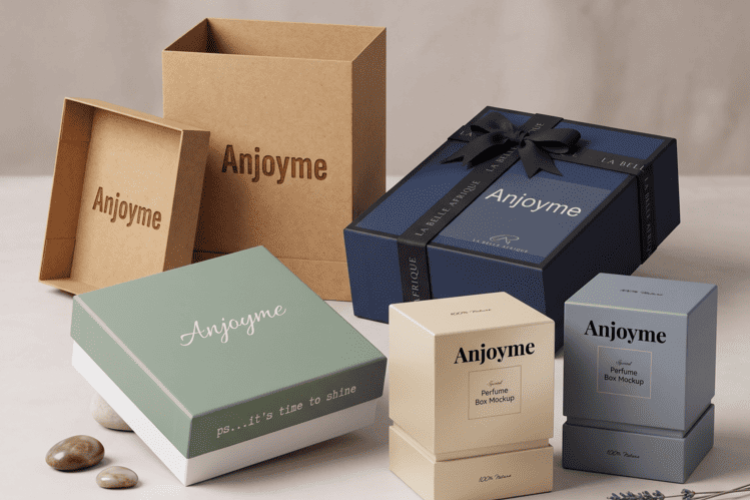
"Telescoping box" is an umbrella term. On a real production drawing, you will be quoting one of four specific structural variants. Each variant changes how much of the base remains visible when the lid is in place, how the box opens, and how the product is displayed at point of sale.
Full Telescope Box
The lid covers the base completely from top to bottom — no part of the base is visible when the box is closed. Maximum protection and the cleanest exterior. Best for hero SKUs where the lid carries the full brand graphics.
Partial Telescope (Shoulder)
The lid covers only the upper portion of the base, leaving a deliberate band of the base visible as a "shoulder." Used for two-tone brand styling and to expose secondary print on the base.
Neck Box
A separate inner "neck" (a third piece) is glued inside the base. The lid slides down over the neck, which creates a precise alignment and a small reveal gap. Used for the most premium tier — watches, fragrance, hardware kits.
Double Cover Box
Two separate covers — one acts as the top lid, the other as the bottom — both slide over a center body tray. Reinforced multi-layer build, ideal for heavier SKUs, stacking durability, and long-haul retail distribution.
Type 1: Full Telescope Box
The Full Telescope variant is the textbook "telescoping box" — a deep lid that drops over the base far enough to bottom out at the floor, leaving none of the base wall visible. Internal friction between the lid and base walls holds the lid in place without needing magnets, ribbons, or closures. Because the entire exterior is the lid, all primary brand graphics, logos, and decorative finishes are printed on a single surface, which simplifies artwork and approval cycles.
Typical applications include premium retail gift sets, single-SKU presentation boxes for high-value hardware, and limited-edition drops where the unboxing reveal is part of the brand story.
Type 2: Partial Telescope (Shoulder) Box
In a Partial Telescope, the lid is intentionally shorter than the base. When the lid is in place, the lower portion of the base remains exposed — typically a 1.5 to 3.0 cm band, depending on the design. This exposed band is called the "shoulder," and it gives designers a deliberate two-surface canvas: the lid for the hero brand mark, the shoulder for accent print, foil banding, or a contrasting wrap material.
Procurement teams often specify Shoulder boxes when they want a co-branded or capsule edition that visually differs from the standard SKU without retooling the entire box. Swap the lid wrap and the SKU reads differently on shelf.
Type 3: Neck Box (Shoulder Neck)
Neck Boxes are a three-piece construction: lid, base, and an inner "neck" ring glued inside the upper rim of the base. The lid slides down over the neck rather than over the base walls themselves. Because the neck is dimensioned to a tight tolerance, the lid lands with a satisfying click of resistance and sits at a precise reveal height every time. This is the format you see on high-end fragrance, fine jewelry, premium spirits, and luxury hardware.
The trade-off is cost. The added neck piece increases material and labor by roughly 15–25 percent versus a Full Telescope, but for SKUs priced in the premium tier, the unboxing precision is worth the upcharge.
Type 4: Double Cover Box
Double Cover Boxes feature two independent covers — one slides on from the top, one from the bottom — both wrapping a center body tray that holds the product. The result is a fully enclosed, fully reinforced container with overlapping wall layers on every face. For SKUs that are heavy, fragile, or that ship long distances through multiple handoffs, the Double Cover format provides the highest structural integrity in the telescoping family. It is also a strong choice for SKUs that need to stack on retail shelves without crushing the units below.
How to Reference These on a Quote Request
When requesting a quote from a US or overseas manufacturer, always specify the variant name (Full Telescope / Partial Telescope / Neck Box / Double Cover) plus three dimensions in millimeters: inside length × inside width × inside height of the base. Add the lid reveal depth separately if you are specifying Partial Telescope or Neck Box. This eliminates 80 percent of back-and-forth during the quoting phase.

Why US B2B Brands Choose Telescoping Boxes
Telescoping rigid boxes carry a higher unit cost than folding cartons, so the decision to specify one is always a business decision, not just a design preference. From conversations with US procurement teams over hundreds of orders, the format earns its place on the bill of materials when one or more of the following five outcomes matter to the brand.
1. Premium Shelf Presence Without Exotic Finishes
The rigid two-piece structure itself reads as premium. Even with a single-color matte wrap and a simple foil logo, a telescoping box outperforms a more elaborately printed folding carton on the same shelf. For brands that need to look premium without inflating decoration costs, the structure does most of the heavy lifting.
2. Protection for Fragile or High-Value SKUs
Greyboard walls of 1,000 gsm or higher resist crushing and edge dings far better than folding board. Paired with a fitted foam or molded fiber insert, a telescoping box can transit retail distribution networks with minimal damage rates — typically below 0.3 percent of shipped units, versus 1–3 percent for unprotected folding cartons.
3. Repeat Brand Exposure After the Sale
Consumers throw away folding cartons. They keep rigid boxes. Whether used for storage, gifting forward, or display on a shelf at home, the box continues to deliver brand impressions for months or years after the original purchase. For brands building long-term equity, this is a measurable marketing asset.
4. Modular Re-Use for Limited Editions
Because the lid and base are separate pieces, brands can tool a single base size and then rotate multiple lid designs over it — seasonal capsules, co-branded drops, regional editions. This shortens the design-to-shelf cycle and reduces total tooling spend across a product family.
5. Compatibility With Compliance Inserts
For brands selling regulated retail products in markets that require child-resistant primary packaging, a telescoping outer box pairs cleanly with a CR-certified inner pouch or container. The outer rigid box delivers the brand experience; the inner primary handles the regulatory compliance under standards like ASTM D3475 and 16 CFR § 1700.20. If you are building a complete kit, see our overview of child-resistant packaging options for inner components.
Strengths vs. Limitations — Honest View
No format is a fit for every SKU. Here is the balanced view procurement teams should weigh before committing to a telescoping spec.
✅ Strengths
- Premium tactile and visual impression on shelf
- Rigid walls protect fragile and high-value contents
- High consumer retention rate after purchase
- Modular lid/base allows multiple SKU variants from one tool
- Wide compatibility with foam, EVA, and molded fiber inserts
- Pairs cleanly with CR-certified inner primary packaging
⚠️ Limitations to Plan For
- 2× to 4× the unit cost of folding cartons
- Ships pre-assembled — higher freight cube per unit
- Longer production lead times (15–25 working days typical)
- MOQs usually start at 500–1,000 units
- Not the right fit for low-margin everyday SKUs
- Greyboard core is heavier than corrugated

Materials, Print Finishes, and Customization Options
Once the structural variant is locked, the next layer of specification is the wrap material, surface finish, and any decorative process applied to the lid and base. These choices drive 60–80 percent of the visual character of the finished box, so they deserve careful selection at the artwork stage.
Common Wrap Materials
| Wrap Material | Look & Feel | Cost Tier | Best Use Case |
|---|---|---|---|
| Art Paper (157 gsm) | Smooth, vibrant CMYK printability | $ | Mass-market premium retail, photographic graphics |
| Specialty Textured Paper | Linen, felt, hammered, or pearlescent surface | $$ | Brands building a tactile signature |
| Kraft (uncoated) | Natural brown, matte, eco-cue | $ | Sustainable-positioning brands, herbal-blend retail kits |
| Cloth Wrap (linen / silk) | Fabric-bonded surface, luxury feel | $$$ | Top-tier jewelry, fragrance, hardware presentation |
| PCR Paper Wrap | Post-consumer recycled fiber, FSC-certified | $$ | EPR-regulated states (CA, OR, CO, ME, MN) |
Decorative Finishes That Work Well on Telescoping Boxes
Because the lid is a single uninterrupted surface, telescoping boxes are particularly well-suited to high-impact decorative processes. The following are the finishes US brands specify most often:
- Hot foil stamping — gold, silver, copper, or holographic foil applied with heat and pressure. Adds a tactile metallic logo or border without ink.
- Spot UV coating — selective glossy coating over matte ink. Creates a print-on-print effect that catches light from specific angles.
- Emboss / deboss — raised or recessed relief stamping. Adds physical dimension to logos and key art.
- Soft-touch lamination — velvet-like matte film. Premium hand-feel, increasingly standard on luxury boxes.
- Holographic film lamination — full-surface rainbow effect. High visual impact for limited editions and capsule drops.
EPR and Recycled-Content Rules to Watch
If you are shipping into California, Oregon, Colorado, Maine, or Minnesota, the state-level Extended Producer Responsibility (EPR) laws now in effect or rolling out by 2026 will price your packaging based on material recyclability and recycled content. Telescoping boxes built on FSC-certified paper or PCR-content greyboard score better in these state programs. For brands distributing nationally, building EPR-friendly specs into your premium display box program early avoids costly material swaps later.
Inner Insert Options
The insert is what holds the product in place inside the base. Insert choice affects unboxing experience, sustainability profile, and unit cost. The four standard options in US production are:
- EVA foam — die-cut closed-cell foam, the most common insert. Affordable, dense, and clean-looking.
- Vacuum-formed PET — clear or colored thermoformed tray. Best when you want the product visible through the insert at first reveal.
- Molded paper pulp — formed from recycled paper fiber. The strongest sustainability cue, increasingly specified by eco-positioned brands.
- Velvet-flocked board — textured fabric over chipboard. Used in jewelry and fragrance for the most premium tactile reveal.

How to Choose the Right Telescoping Box for Your SKU
The four variants are not interchangeable. The right choice comes from matching the structural format to three inputs: the product weight class, the retail price tier, and the desired unboxing experience. Use the four-step framework below to narrow your specification before requesting quotes.
Weigh and Measure the SKU
Record the product weight in grams and outer dimensions in millimeters. Anything over 500 grams should default to Double Cover for stacking integrity.
Set the Retail Price Tier
Under $30 retail → Full Telescope. $30–$80 → Partial Telescope. $80+ → Neck Box. The unit cost of the box should not exceed 8–12% of retail.
Decide the Brand Surface
One-color hero graphic → Full Telescope. Two-tone or co-branded → Partial Telescope. Precision reveal moment → Neck Box.
Confirm Shipping Profile
Air freight or single-unit retail handoff → any variant works. Heavy stacked retail or multi-warehouse transit → Double Cover.
Quick Decision Matrix
Choose a Full Telescope Box if…
- The SKU is under 300 g and not fragile
- Your brand graphic is a single hero design
- You want the lowest unit cost in the rigid family
- Retail price is $20–$50
Choose a Neck Box if…
- The SKU sits in the luxury tier ($80+ retail)
- The unboxing moment is a marketing asset
- You want a precision reveal gap
- Two-tone or contrast wrap is part of the design
Frequently Asked Questions
What is the minimum order quantity (MOQ) for a custom telescoping box in the US?
Most US-facing manufacturers quote MOQs of 500 to 1,000 units for custom-printed telescoping boxes. Below 500 units, tooling and setup costs make the unit cost economically unrealistic. Some factories offer "stock plus print" programs at 250 units, where the base structure is pre-made and only the printed wrap is custom — useful for sampling and pilot runs.
How long does production take from artwork approval to delivery?
Standard lead times for fully custom telescoping boxes are 15–25 working days for production, plus 3–7 days air freight or 25–35 days ocean freight to US warehouses. If you are running a holiday or launch deadline, build in a 10-day buffer for artwork revisions and a press-proof approval cycle. Rush production at 1.3×–1.5× pricing can compress production to 10–12 days at most factories.
Can a telescoping box be used as child-resistant primary packaging?
No. A standard telescoping box is not certified under ASTM D3475 or 16 CFR § 1700.20 as child-resistant. The two-piece slip-fit design does not meet F=1 special packaging requirements on its own. For regulated retail SKUs, brands typically use the telescoping box as a premium outer presentation layer and place a separately CR-certified inner pouch or container inside. This separation lets the brand experience and the regulatory compliance both work without compromise.
What is the difference between a telescoping box and a setup box?
"Setup box" is the broad industry term for any rigid pre-assembled box built on a greyboard core. A telescoping box is one specific subtype of setup box — the two-piece slip-fit variant. Other setup box subtypes include book-style hinged boxes, magnetic closure boxes, drawer-and-shell boxes, and collapsible rigid boxes. So every telescoping box is a setup box, but not every setup box is a telescoping box.
Are telescoping boxes recyclable in US municipal streams?
The paper components — greyboard core, paper wrap, printed graphics — are recyclable in most US municipal paper streams. The components that complicate recyclability are the inserts (especially EVA foam and PET trays) and any heavy lamination film. To maximize curbside recyclability, specify FSC-certified paper wraps, water-based inks, and molded paper pulp inserts instead of foam. This combination scores well under California SB 54 and the rolling state EPR programs.
What dimensions should I provide when requesting a quote?
Provide inside dimensions of the base in millimeters: length × width × height. These are the dimensions that determine whether the product and insert fit. The outer dimensions of the lid will be calculated by the manufacturer based on board thickness and the variant chosen. If you want a specific lid reveal depth for a Partial Telescope or Neck Box, state that separately (e.g., "lid covers top 50 mm of 70 mm base height"). Including a photo of the product in its insert speeds up the quoting cycle significantly.
Can I order telescoping boxes with both custom outer printing and a CR-certified inner kit?
Yes — this is one of the most common B2B kit configurations. The telescoping outer is custom-printed for brand presentation; the inner kit (a CR-certified mylar pouch, jar, or tin) carries the regulatory load. The two are sourced together, sometimes from the same supplier, and assembled at the same time. If you are building this kind of kit, explore our CR-certified mylar pouch range for inner components that pair with telescoping outers.
What is the difference between a telescoping box and a magnetic closure box?
Both are rigid setup boxes, but the closure mechanism is different. A magnetic closure box is a single-piece book-style construction with a hinged flap held shut by embedded magnets. A telescoping box is two completely separate pieces with no hinge. Magnetic boxes feel more "gift-like" and open horizontally; telescoping boxes feel more "presentation-like" and open vertically. The choice usually comes down to whether the unboxing reveal is meant to be horizontal (magnetic) or vertical (telescoping).
Ready to Spec Your Custom Telescoping Box?
Anjoyme Packaging Manufacturer produces custom telescoping rigid boxes for licensed retail brands and white-label processors across the US. Tell us your dimensions, retail tier, and SKU profile, and our spec team will return a structured quote within one business day — including material recommendations, decorative finish options, insert specs, and lead-time projections.